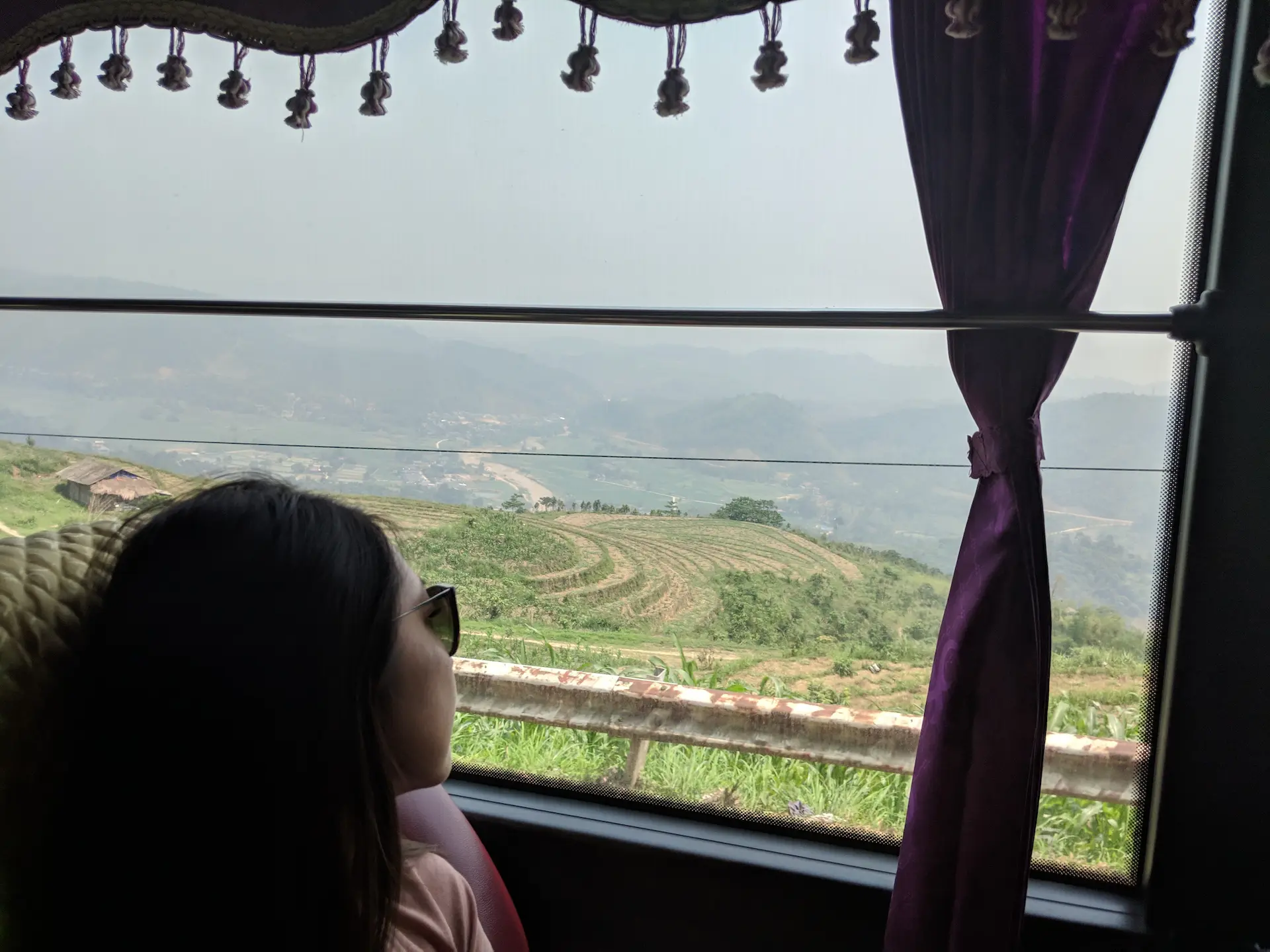
Sapa, also spelled Sa Pa, is a small town in the Hoàng Liên Son Mountains of northwestern Vietnam. Within Lào Cai Province, it overlooks the steep terraced rice fields of the Muong Hoa Valley. Historically, ethnic minority hill tribes, such as the Hmong, Tay and Dao, made up much of the population. With lower summertime temperatures due to its high elevation, it has long been a vacation getaway for Hanoi residents. Today, it is one of the most visited international tourist destinations in Vietnam. Tourists arrive by train and bus-loads for Vietnam’s best trekking and to experience authentic mountain life and villages that dot the mountains.
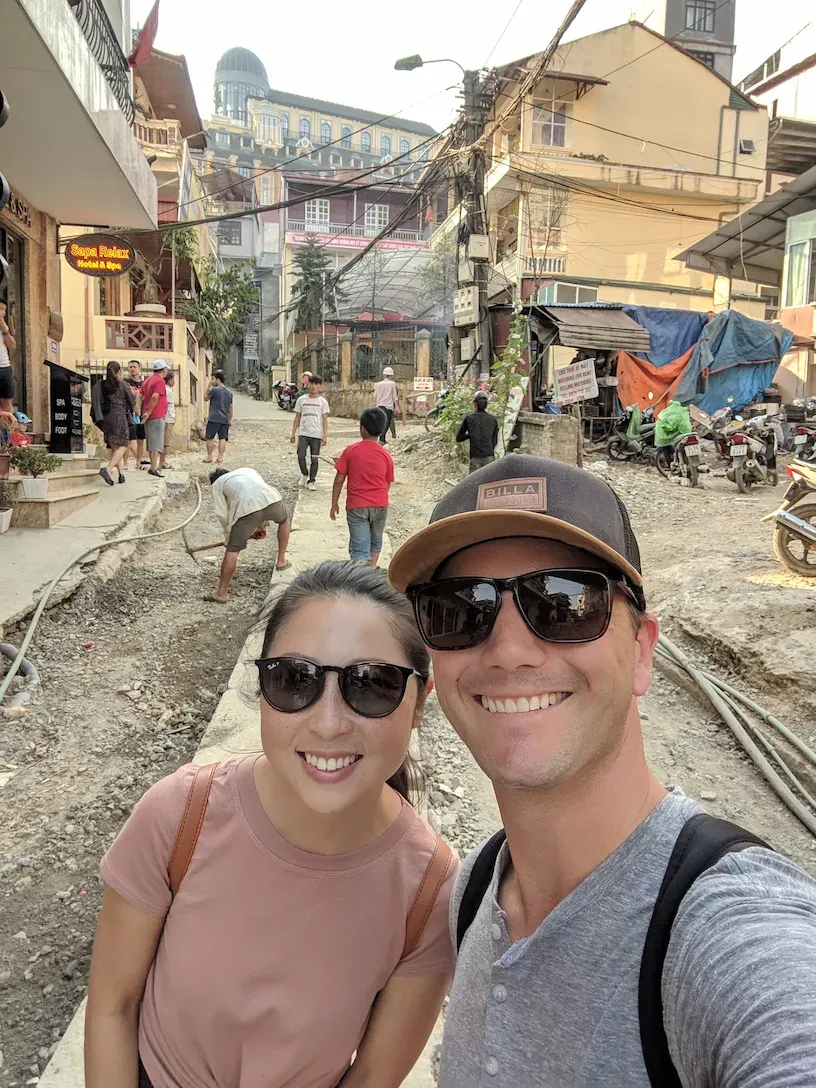
Its popularity has spawned a complete transformation of Sapa Town, growing 3x in the past few years. The entire town seemed to be under construction when we visited: dug up roads (making way for newer, wider ones) exposed new half-built sewer and storm runoff infrastructure projects, and new hotels dotted the town. The locals call it “Dirty Sapa.” Many of the development projects are either owned or paid for by Chinese or lowland Vietnamese investors, as the local villagers are generally too poor to fund such extravagant ventures.
Arriving at the hotel, My Boutique, sticky, sweat-stained and dusty from our walk from the bus station, Tu, the receptionist offered us fresh watermelon juice as she expertly dotted and circled a map with recommendations. Given our limited time, we booked everything we wanted to do through the hotel.
A trek with a local tribes-woman was arranged for our first full day; she was waiting for us in the hotel lobby in the early morning.

Mountain Trek with Tong
“My name is Tong, like dong but with a T,” she explained. Our tour guide for the day was a local Hmong who lives in the mountains. When Tong picked us up, her teenage son joined us as we walked through town. We thought he was trekking with us but he abruptly departed once Tong popped into a store to buy him a SIM card. “He likes to play games.”
As she steered us towards the mountains, I asked how she learned English. The way she learned was similar to how many Hmong women are learning. The savvy women of Sapa are all helping each other speak English so that they could earn a new source of income: guiding tourists and hosting homestays, while their husbands work in town.
Many of today’s Sapa guides started out shadowing English speaking friends that were guiding tourists. Non-English speaking village girls quietly follow and listen to both the guides and foreigners, over time learning to answer typical and atypical questions. Some even pick up American, British, and Australian accents! How did the initial tribes-woman learn to speak English? Tong wasn’t sure.
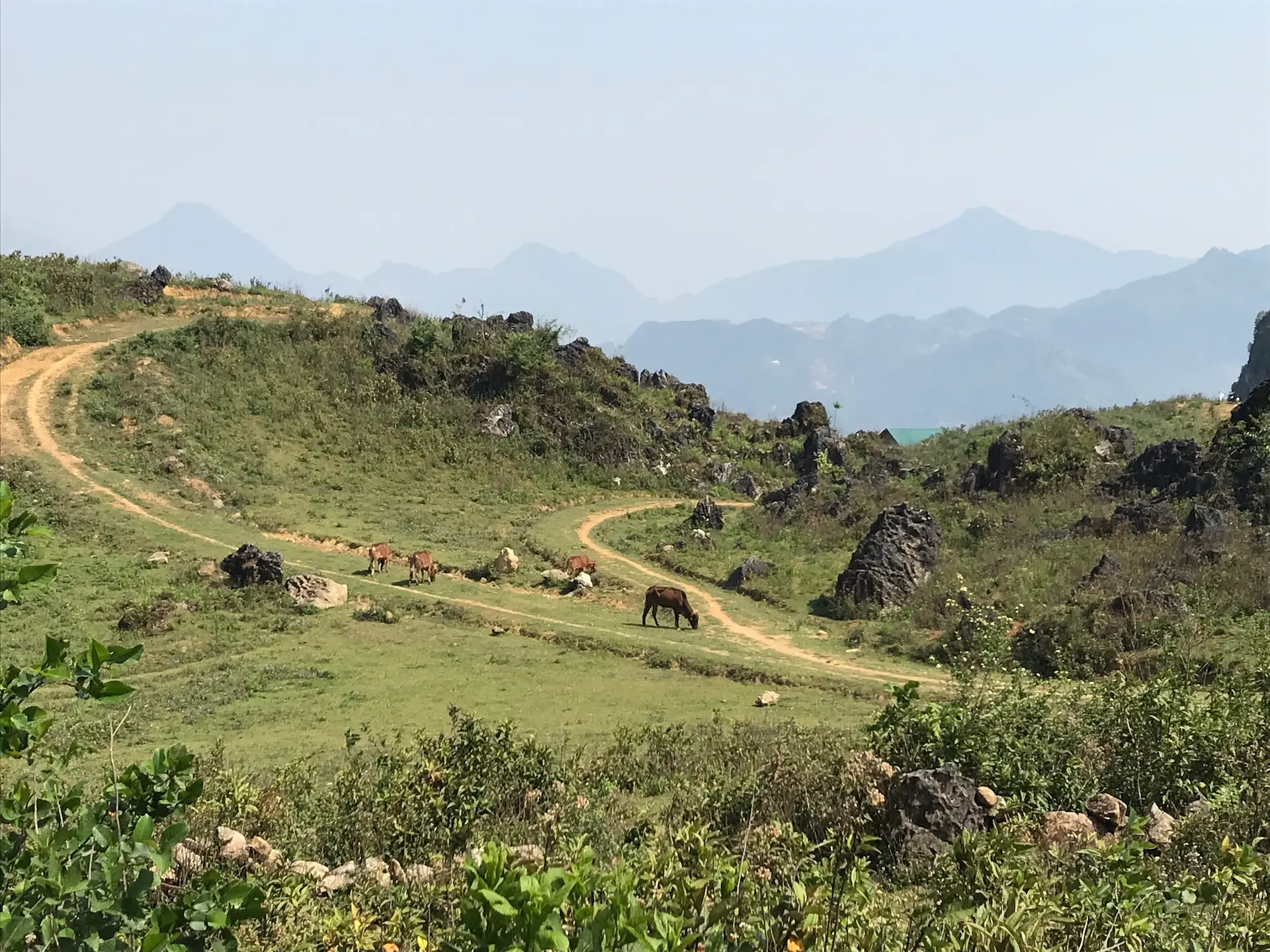
We opted for the longer trek with fewer tourists. (Funny how tourists are always trying to avoid tourists.) Our 14km hike started from a small trail just to the northeast of the new market, trekking into the hills above Sapa Town through Sa Seng and Hang Da and onto Hua Thao. The more popular path is a 10km hike starting from Sapa Town, heading southeast down into the valley past Y Linh Ho to Lao Chai to Tavan.

We were able to pepper Tong with questions, questions like “What’s that?” and “How do you say [fill in the blank]?” as well as questions about Sapa Town construction, about schools, about her family. We had expected her to be suspicious or negative about the Chinese buying land and building dams, but she was completely happy with the development. “We have internet and electricity now.” “We have roads so the children can go to school.” It was a completely new perspective. At the time, Damien and my perspective was that the Chinese were taking over and leaving very little choice and opportunity for the ethnic minorities that live in the region.
Throughout the trek, at least ten groups of children ran up to us with handfuls of bracelets, begging us to “Buy one? Buy one?” Many of these children were missing school and spending their days on random stretches of trail to earn a few bucks. Tong neither discouraged the children nor pressured us to buy. In Sapa, locals look out for each other, and no one stops another from feeding his or her family. This became especially clear when a 72-year-old grandmother followed us down the mountain for six kilometers, helping me across tricky patches, with the ultimate goal of selling us a few textiles before returning back up the mountain. When she joined, Tong gave us a warning of her desires then happily walked along.

Tong brought us to her home during the last minutes of our time together. She showed me her traditional Hmong dresses, wrapped the intricate garments around me, and exclaimed with pride, “Picture!”


That night, we went to bed content and grateful for our experience with Tong. She had a joyful zeal for life, laughing constantly and so proud of her family and her people. We laid down on soft white linen sheets in our air-conditioned room, thinking about Tong’s family in their humble shack a mile away. Another thought-provoking day for the books.

“There is no water.”
After a day of motorbiking, we returned to our hotel dusty and sweaty.
“Welcome back. Will you be taking a shower?” asked Tu.
“Oh, yes!” I replied in excitement.
“Please take a fast one; there is no water,” Tu said kindly.
“What do you mean there is no water?” me, confused.
“The government turned it off; there is no more,” Tu replied matter of factly.
This sounded so bizarre to me. So foreign. How could there be no more water? Reflecting on my reaction, I must have looked like a was born with a silver spoon in my mouth. (Who buys silver spoons?)
After a quick shower, we went down to the lobby to learn more. There was a water shortage in Sapa that April. Hotels and restaurants were no longer receiving water due to a prolonged drought and the significant demand from new businesses that have popped up to accommodate legions of tourists. Four out of five sources supplying Sapa’s water plant had gone dry; the remaining water was distributed to hospitals, schools, and irrigation. In the future, the government plans to build a larger water plant, but for now, hotels would need to figure out their own solutions.
We had dinner at the hotel that night, ordering anything that didn’t require water. Tuan, who owns the hotel with her husband, sat three feet from our dinner table at the receptionist’s desk with her three-year-old daughter. We ate our bun cha and stir fry as she told us her story. She told us about her move from Hanoi; her preference for the fresh Sapa air and safer, quieter roads; how they thoughtfully built and staffed the hotel (Tu had relocated her family to Sapa to work with Tuan); her mom who had been tending to all of the rooms; and their desire to be the best hotel in Sapa by being smaller and more personal.

The next morning, there were 30 large plastic buckets being filled by a water tank in front of the hotel. Newly built My Boutique smartly incorporated a water-tank beneath the property. The entire staff was outside ushering buckets back and forth, emptying the liquid gold into the tank. To keep their business going, Tuan had purchased a provisional water supply, costing her between VND300,000 ($12.9) - VND500,000 ($21.5) per cubic meter (264 gallons)—an exorbitant amount. For perspective, our nightly rate at the hotel was a little over 1 million VND per night (roughly $50 USD).

I had not expected to find such strong women in the mountains of Vietnam. Tong, Tuan, and Tu are true entrepreneurs and role models. Rolling with the punches and grateful for what they have. Resourceful, positive women who make it work as the world changes around them, as Sapa develops its electrical and water infrastructure; basic needs I have taken for granted. As our bus drove down the mountain back to Hanoi, I humbly watched barefoot children walk uphill towards town.